About Memory House
Stories deserve to outlast us.
Memory House is a living archive of family, community, and place — preserving voices, memories, wisdom, and lived experiences of elders, families, communities, and places.
Founded
2025
Based in
Victoria, British Columbia, Canada
Status
Mission-driven · Not a registered charity
Contact
8.1M
Canadians are aged 65 and older — the generation whose stories we stand to lose
Statistics Canada∞
A preserved story lasts forever
Our Story
Where Memory House began
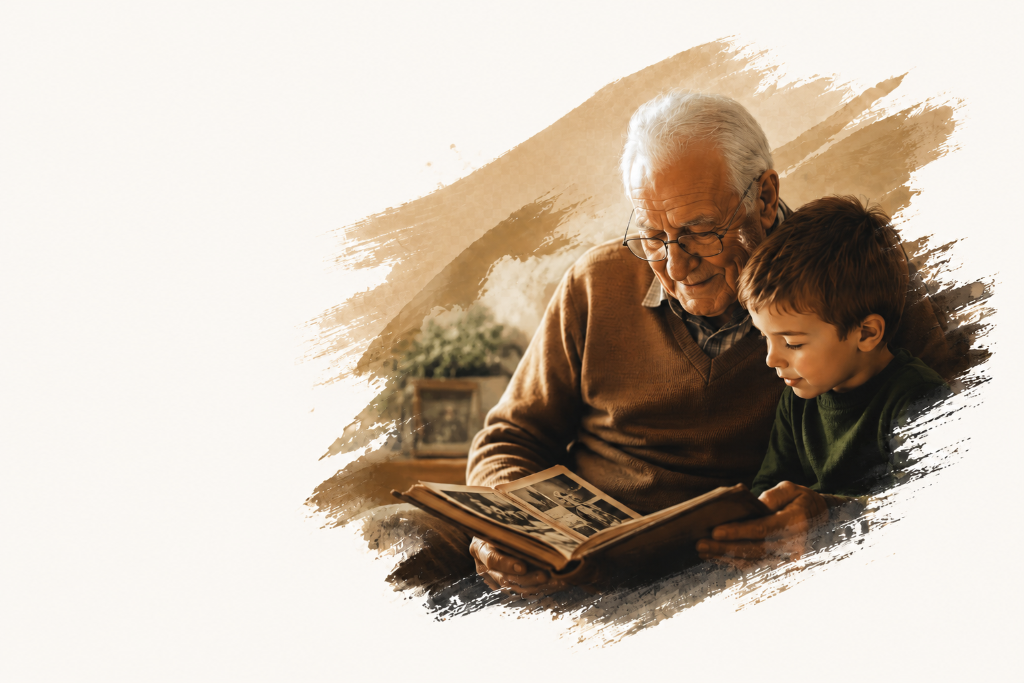
Memory House was born from a simple, painful truth: too many elder stories are lost. When a grandparent passes, decades of memories, lessons, recipes, and hard-won wisdom often disappear with them.
We built Memory House to change that — to give families, communities, and places the tools to capture, preserve, and share those irreplaceable voices before it's too late.
"Every elder who passes takes a library with them. Memory House is how we keep the library open."
— Judah Paemka, Co-founder
Our Mission
Why we exist
Memory House exists to preserve the wisdom, memories, and lived experiences of elders and communities through accessible digital storytelling, helping families and future generations stay connected to the people, places, and lessons that shaped them.
Our Vision
Where we're going
To become the trusted digital home for intergenerational storytelling — where every family, community, and place can preserve its stories for generations to come.
Why It Matters
Four reasons elder stories matter
Intergenerational Connection
Stories create bridges between generations, giving young people roots and giving elders a living legacy that echoes far beyond their years.
Digital Preservation
We archive stories in formats that last — video, audio, text, and photo — ensuring that memories are never lost to time.
Community Memory
Neighbourhoods, towns, and cities carry histories that deserve to be documented, celebrated, and passed on.
Cultural Heritage
Every language, tradition, and lived experience is a thread in the fabric of our collective identity. We help preserve them.
Who We Serve
Built for everyone who carries a story
Families
Preserve grandparents' stories for children and grandchildren.
Communities
Document the lives of local elders and community builders.
Schools
Connect students with elder voices through guided interview programs.
Municipalities
Create public story installations at parks, benches, and landmarks.
Archives & Libraries
Build accessible digital story collections for public use.
Cultural Organizations
Preserve heritage narratives across languages and traditions.
Who We Are
The people behind Memory House
A small team passionate about preserving the stories that matter most — before they're gone.
Judah Paemka
Co-founder
Judah is a Victoria, BC-based photographer and serial entrepreneur whose work chases mood, story, and the in-between moments most people miss. An audiophile and drone pilot with a background in IT service management, he brings a cinematic, craft-first eye to Memory House — treating every elder's story as a scene worth preserving in full, honest detail. He has documented Black community business owners and events across Vancouver Island, and his obsession with light, sound, and honest emotion now shapes how Memory House captures voices for the generations ahead.
Charles Onianwah
Co-founder
Charles co-founded Memory House alongside Judah. A full founder profile is coming soon.
How We Verify Stories
Every story is checked before it's shared
Trust is built on transparency. Here is the step-by-step process every submission goes through before it appears in the archive.
Step 1
Consent confirmed
Every submitter confirms they have consent from the story subject — or their family, if the subject has passed or cannot consent — before a story is accepted.
Step 2
Editorial review
A Memory House team member reviews each submission for completeness, dignity, and accuracy before it is approved for publication.
Step 3
Contributor verification
Stories from verified family members, recognized community archivists, and partner organizations carry a trust badge so readers can see the relationship.
Step 4
Privacy & map review
Visibility and map-location privacy are set deliberately. Sensitive locations are shown approximately or hidden, never exposing home addresses or grave references.
Step 5
Corrections & removal
Any family member or community member can request a factual correction, update, or full removal at any time — and we act on every request.
Step 6
Immutable record-keeping
Every approval, privacy change, archive, and correction is logged in a permanent activity log, so the archive's history is always traceable.
The Contribution Lifecycle
Where your story goes
No black box. Here is what happens from the moment you press record to the moment a grandchild finds the story decades later.
Step 1
Your voice
A conversation with an elder — recorded at the kitchen table, over the phone, or in a quiet room.
Step 2
Recorded
Audio, video, or written words are captured and saved — nothing is trimmed without your say.
Step 3
Reviewed
A Memory House team member reads or listens, checks consent, and prepares it for the archive.
Step 4
Archived
The story is preserved in durable formats and given a permanent home in the archive.
Step 5
Shared
Family, community, and future generations can return to it — for as long as Memory House endures.
Handled with care.
Every submission is reviewed before publication. Memory House prioritizes consent, dignity, privacy, cultural respect, and the right to request corrections or removal.
Part of the historical record
Our Archival Pledge
Stories entrusted to Memory House are not parked in a private database. We commit to preserving every approved story in durable formats, maintaining access for as long as the archive endures, and working with local archives, museums, and libraries so that these voices are recognized as part of the historical record — not separate from it.
- Durable formats — audio, text, and image preserved for long-term readability.
- No paywalls between families and the stories that belong to them.
- Formal partnerships with archival and heritage institutions wherever possible.
Ready to preserve a story?
Every story submitted today becomes part of a living archive that future generations will treasure.